
What Happens During Stock Market Crashes?
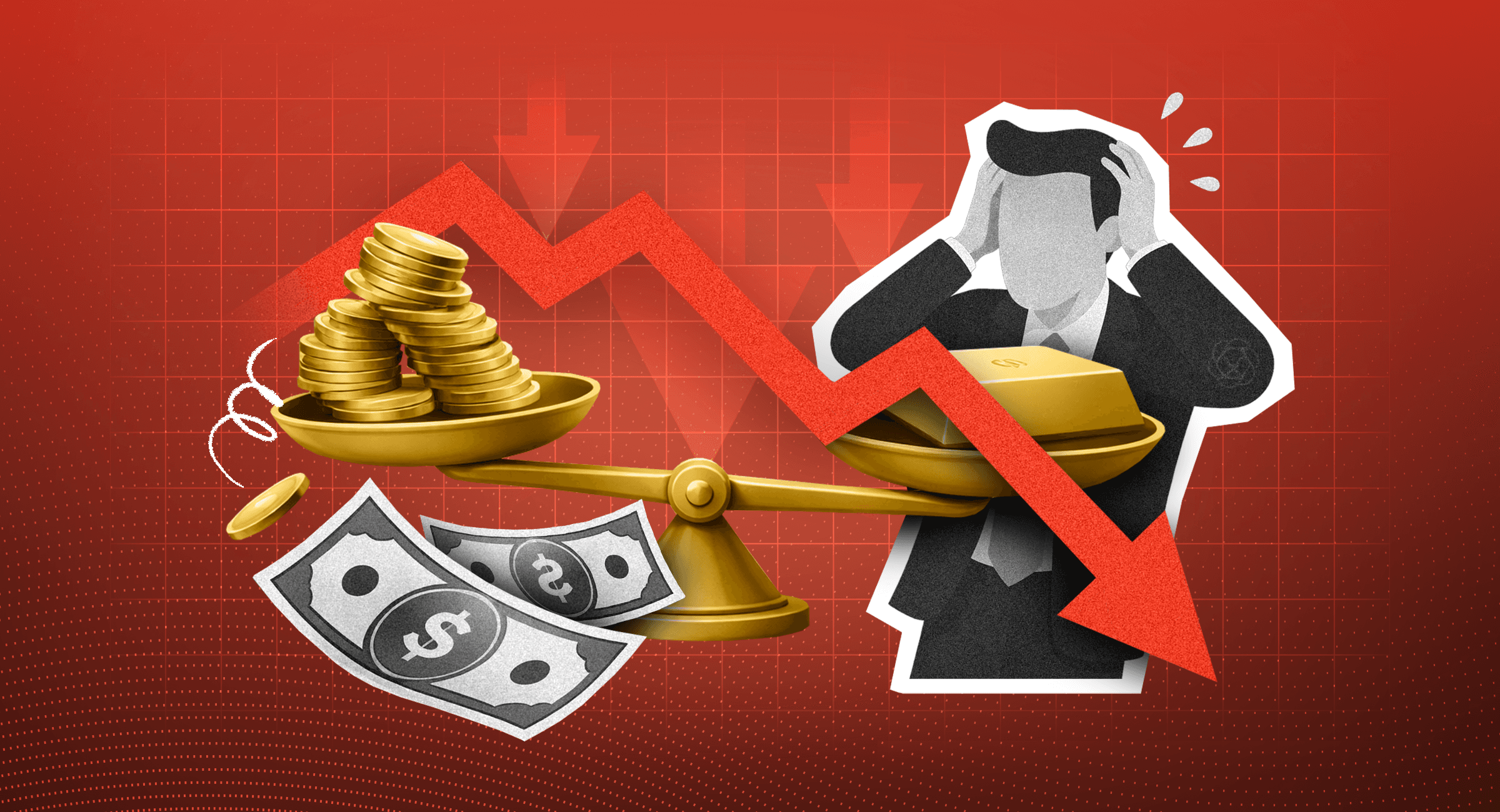
Stock market crash: why it happens and how to protect your savings with gold, a trusted safe-haven asset.
Stock market crashes are among the most unsettling events for investors. Headlines turn alarming, portfolios swing sharply, and confidence can evaporate almost overnight. While every crash has its own trigger, the patterns of market behaviour, and investor reactions, tend to repeat.
With global equities facing pressure from high interest rates, persistent inflation concerns, geopolitical tensions and historically elevated valuations, the possibility of a market correction feels closer to the surface again.
When markets are calm, risk often feels abstract. During a crash, it becomes very real, very quickly. Prices move faster than expectations, long-term plans are tested, and investors are forced to confront how their money is truly positioned. Understanding what typically happens in these moments, and how different assets respond, can help investors remain anchored to long-term objectives rather than short-term emotion.
A brief look at today’s market backdrop
In recent months, markets have shown signs of strain. After years of easy money, central banks have kept interest rates higher for longer to control inflation. This has increased borrowing costs, weighed on company earnings, and raised concerns about slower economic growth.
At the same time, equity valuations, particularly U.S. technology stocks, remain elevated by historical standards. Combined with geopolitical uncertainty, volatile energy markets, and nervous bond yields, this backdrop has renewed discussion around the risk of a stock market crash or deeper downturn.
While the timing of any crash is impossible to predict, history shows that market behaviour during crises follows recognisable patterns.
What is a stock market crash?
A stock market crash is a sudden, sharp and widespread fall in share prices, typically driven more by collapsing confidence than by a single piece of news.
Crashes often follow periods of optimism or excess, when asset prices drift away from underlying economic reality. Once sentiment shifts, selling can accelerate rapidly.
Major historical examples include:
- The Wall Street Crash of 1929
- Black Monday in 1987
- The Global Financial Crisis of 2008
- The COVID-19 market shock in 2020
Each crisis had different causes, but similar investor psychology and market dynamics.
What typically causes a stock market collapse?

Stock market crashes are rarely random. Common drivers include:
Excessive valuations
When shares become expensive relative to earnings, even small disappointments can trigger steep declines.
Tight financial conditions
Rising interest rates reduce liquidity, increase borrowing costs, and make lower-risk assets more attractive than equities.
Economic shocks
Recessions, banking stress, pandemics, or geopolitical conflict can quickly undermine investor confidence.
Leverage and forced selling
Highly leveraged investors may need to sell assets rapidly to meet margin calls, accelerating falls.
Herd behaviour
Fear spreads quickly. As prices drop, more investors rush to exit, reinforcing the downturn.
How markets behave during a crash
When a downturn intensifies, several patterns often emerge:
- Volatility rises sharply
- Equities fall quickly, especially growth and cyclical sectors
- Market liquidity weakens
- Different asset classes begin moving together
- Demand increases for perceived safe-haven assets
This is when true diversification becomes most important, and most tested.
What happens to a managed portfolio or pension pot?

Most investors experience market crashes through managed portfolios, workplace pensions, or ISAs rather than direct share trading. Those in this situation, can feel like “concerned-bystanders” - anxious about their investments but unable to help.
During severe downturns:
- Equity-heavy portfolios can fall significantly
- Risk models may underestimate extreme conditions
- Automatic rebalancing may lag fast market moves
- Losses often remain paper losses unless assets are sold
For UK investors, these exposures frequently sit inside long-term pension or ISA structures, making it especially important to understand how retirement savings behave during a stock market crash.
A key challenge is that many investors simply do not know their true asset allocation or downside risk.
Is there anything a “concerned by-stander” can do?
Even without managing investments directly, investors can take meaningful steps:
Understand asset allocation
Know how much is in equities, bonds, property, cash, and alternatives.
Assess real risk exposure
A “balanced” portfolio may still depend heavily on stock markets.
Check liquidity
Some investments cannot be sold quickly in stressed conditions.
Avoid panic selling
History shows markets often recover after major declines.
Consider diversification beyond financial assets
This includes exposure to real assets such as precious metals.
Gold and silver during stock market crashes

Historically, precious metals have played a distinctive role during financial crises.
Gold as a safe haven
Gold has often attracted demand during market stress because it:
- Is not tied to company earnings
- Carries no default risk
- Is independent of banks or governments
- Often benefits when real interest rates fall
This is why gold is frequently discussed as a safe-haven asset during stock market crashes.
You can explore current physical gold investment options on GOLD AVENUE’s gold marketplace.
Silver: more volatile, but complementary
Silver combines monetary appeal with industrial demand, making it typically more volatile than gold during downturns. However, it has historically rebounded strongly in recovery phases.
Investors comparing precious metals can compare options and prices of GOLD AVENUE’s silver products.
Historical gold price movements in pounds sterling can be explored using GOLD AVENUE's live charts.
Historical lessons: how markets behaved in past crises
Global Financial Crisis (2008)
Driven by leverage and banking instability, global equities fell dramatically. Gold rose during the most severe phases as investors sought assets outside the financial system, reinforcing its role as systemic-risk protection.
COVID-19 crash (2020)
Markets dropped at record speed as economies shut down. Gold briefly fell during liquidity stress but quickly surged to new highs amid massive monetary stimulus, highlighting both volatility and resilience.
Inflation and rate-hiking shocks
High inflation and rising rates typically pressure equities but have historically supported gold when real interest rates remain low, helping preserve purchasing power over time.
Five key questions to ask your wealth manager before, during, and after a crash
- What happens if equities fall 20–30%?
Request realistic stress-test scenarios. - How diversified is my portfolio in a crisis?
Do assets truly behave differently under stress? - Do I hold any physical precious metals?
If not, what is the rationale? - How actively is the portfolio managed in downturns?
Rules-based, discretionary, or passive? - What is the recovery strategy after a crash?
Preservation, rebalancing or repositioning?
Clear answers can reduce emotional decisions at critical moments.
Key takeaways: understanding stock market crashes
- Crashes are usually driven by confidence loss, tight liquidity, and high valuations.
- Pensions and ISAs can fall sharply when heavily exposed to equities.
- Traditional diversification may weaken as assets move together.
- Gold has historically drawn safe-haven demand, while silver is more cyclical.
- Understanding risk, liquidity, and precious-metal exposure helps investors stay calm through volatility.
Final thoughts
Stock market crashes are painful but not unusual. Markets have historically fallen, recovered and continued evolving, often rewarding patient, disciplined investors.
Understanding how crashes unfold, how portfolios react and how assets such as gold and silver have behaved in past crises can meaningfully improve long-term financial resilience.
While no one can predict the next crash, knowledge, and preparation remain among the most effective forms of protection.
FAQs
What happens during a stock market crash?
Share prices fall rapidly across many companies, volatility rises and investors often move money into safer assets such as cash, government bonds or gold.
What causes stock market crashes?
Common causes include high valuations, rising interest rates, economic shocks, excessive debt and sudden loss of investor confidence.
Do pensions lose money in a market crash?
Yes. Pension values can fall significantly if heavily invested in equities, although losses are usually temporary unless investments are sold.
Is gold a safe haven during market crashes?
Historically, gold has often held value or risen during financial crises, particularly when real interest rates fall or confidence in financial systems weakens.
Should investors sell during a crash?
History shows markets often recover over time. Selling during severe declines can lock in losses, which is why long-term strategy and diversification matter.