
Top 10 gold-producing countries in 2026
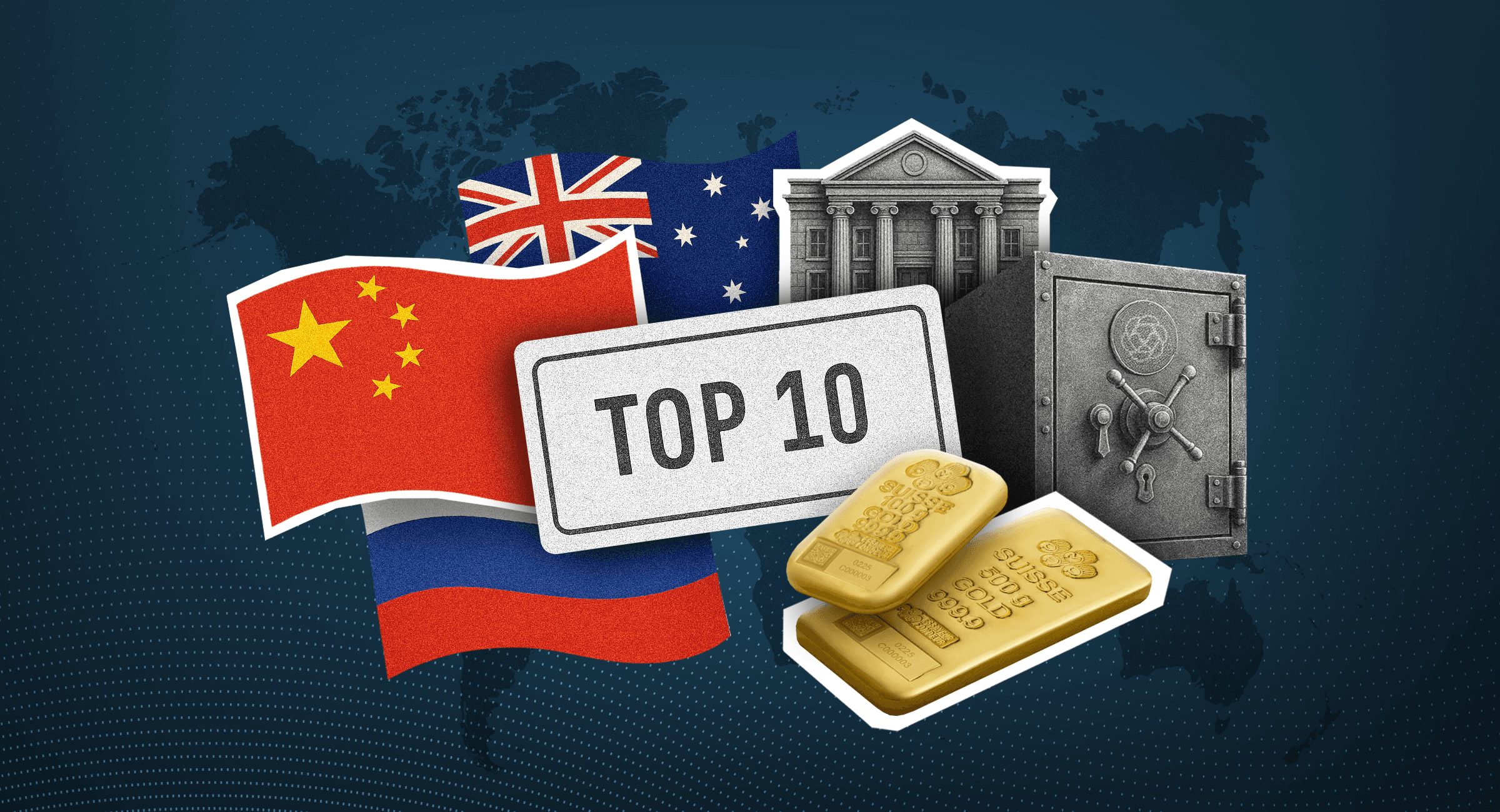
Gold is one of the most important precious metals in the world. Used as a store of value, an industrial raw material and an investment asset, it plays a central role in the global economy. However, only a few nations can boast large quantities of gold beneath their feet. But which country produces the most gold? Step this way and let’s mine the stats…
Global gold production by country
To give us a clue as to what the top 10 gold producers 2026 might be, let’s look back at 2025. According to data from the World Gold Council, the world's leading gold producers last year were…
- China: ~370 tonnes of gold per year
- Australia: ~310 tonnes of gold per year
- Russia: ~300 tonnes of gold per year
- Canada: ~200 tonnes of gold per year
- United States: ~170 tonnes of gold per year
- Ghana: ~130 tonnes of gold per year
- Uzbekistan: ~120–130 tonnes of gold per year
- Indonesia: ~110 tonnes of gold per year
- Peru: ~100 tonnes of gold per year
- Mexico: ~95 tonnes of gold per year
In total, mines worldwide produced approximately 3,800 tonnes of gold in 2025.
Based on today’s live gold price (10 June 2026), that would cost over $505 billion to buy!
Good to know
The total amount of gold mined throughout human history is estimated at around 220,000 tonnes. This means that less than 2% is added to the existing global stock each year. Just one of the reasons why gold is considered a relatively rare commodity.
1. China: the world's leading gold producer
With approximately 380 tonnes extracted last year, China remains the world's biggest gold mining country, thanks to vast gold deposits.
The gold mining industry also receives strong support from the Chinese government, facilitating exploration and exploitation of these deposits, while advanced mining technologies enable efficient and profitable gold extraction.
The sector is dominated by large, state-controlled groups, including Zijin Mining, China Gold International Resources, and Shandong Gold Mining. In addition to being the leading producer, China is also one of the world's largest consumers of gold, driven by strong demand from investors, jewellers, and the central bank.
2. Russia
Russia ranks second with an annual gold output of around 340 tonnes. It benefits from significant deposits, primarily in regions such as Siberia and the Russian Far East, while there are also vast untapped gold reserves.
In Russia, the sector is dominated by giants such as Polyus, Nordgold, and JSC Pavlik. Despite restrictions imposed by the United States, the European Union, the United Kingdom, and other Western countries since 2022, Russia has continued to post production figures exceeding 300 tonnes per year.
Part of Russia’s gold is absorbed by the domestic market and national reserves, while a significant portion continues to reach international markets via countries that do not apply sanctions on Russian gold, such as in Asia and the Middle East.
3. Australia
Australia ranks third in the list, producing approximately 290 tonnes of gold, thanks to some of the world's largest and most profitable mines, such as Kalgoorlie and Super Pit. The country benefits from a robust mining infrastructure and significant investment in the sector, fostering stable, high production.
Key operators include Northern Star Resources, Evolution Mining and Newmont, which has strengthened its presence in the country following the acquisition of Newcrest Mining.
4. Canada
Producing approximately 210 tonnes of gold last year, Canada is consistently one of the major players in the global gold industry.
Agnico Eagle Mines, Barrick Gold and Kinross Gold are among the companies that contribute the most to national production.
5. Peru
Peru produced approximately 200 tonnes of gold in 2025, a figure that’s been rising since 2020.
The sector is dominated by the local company Buenaventura and by the multinational Newmont, owner of the famous Yanacocha mine.
6. Ghana
Ghana is the leading gold producer in Africa, turning out around 180 tonnes in 2025.
Mining activities are carried out by international groups such as Gold Fields, AngloGold Ashanti and Newmont, which operate some of the most productive mines on the continent.
7. The United States
The United States produced approximately 150 tonnes of gold last year, primarily concentrated in the state of Nevada.
Most of the production comes from Nevada Gold Mines, a joint venture between Barrick Gold and Newmont considered the largest gold mining complex in the world.
8. Uzbekistan
Uzbekistan produced approximately 120 tonnes of gold last year and is home to one of the world's largest gold mines.
The Navoi Mining and Metallurgical Company runs the Muruntau mine - one of the largest open-pit gold mines in the world.
9. Mexico
With a production of around 110 tonnes of gold in 2025, Mexico remains one of the world's major gold producers.
Among the leading companies are Fresnillo plc, Torex Gold Resources and Newmont.
10. Indonesia
Indonesia produced approximately 100 tonnes of gold last year.
Mining companies in the country include PT Freeport Indonesia, Merdeka Copper Gold, and Archi Indonesia.
Who's in charge of gold mining in the world?
Although the ranking of the largest producers of gold is usually presented by country, a significant portion of global production is concentrated in the hands of a few large mining companies.
Among the world's leading producers are Newmont, Barrick Gold, Agnico Eagle Mines, Polyus, Zijin Mining, and AngloGold Ashanti. These companies operate mines across several continents and make a significant contribution to the global gold supply.





Who buys gold?
Demand comes from three key sectors, and is continuing to grow across the board.
- The jewellery sector
Nearly half of all gold is snapped up to make jewellery. Aside from its beauty, gold is also very malleable and ductile, making it ideal for creating intricate designs, from tiny earrings to the crown jewels. - Industry
Gold is highly conductive and doesn't rust, making it the perfect material for electronic components. Its exceptional reflectivity is also used in space equipment and medical technologies. - Investors
A significant portion of production is destined for investment. Gold possesses an intrinsic value, making it a reliable long-term store of value. It tends to retain its value and protects against inflation. Gold can therefore be added to a portfolio to diversify investments and preserve wealth, particularly during periods of financial volatility. These characteristics make it a popular choice for both institutions (central banks or governments) and individuals.
Mints and refineries, such as the Royal Mint, buy gold directly from major producers before transforming it into coins, ingots or collector's items.
If you’re not a mint, you’ll need to find a trusted dealer to invest in gold. GOLD AVENUE offers a wide range of gold products to help diversify any portfolio, from cost-effective bars to beautiful collectible coins. And all with secure storage.
Good to know
If you’d like to invest in major gold producers, you can buy shares, ETFs or gold funds. While you won’t own any physical gold, you’ll gain indirect exposure to the precious metal.
How global gold production influences the price of gold
Mining is one of the factors that contributes to the balance between supply and demand. A significant increase or decrease in extraction can therefore have an impact on the market.
However, the price of gold also depends on inflation, interest rates, central bank purchases, investment demand and geopolitical tensions.
That is why it's interesting to monitor global production, but it’s not a method of predicting market movements.
Gold production and gold reserves: what's the difference?
Many investors confuse the countries that produce the most gold with those that possess the largest gold reserves.
Production indicates the amount of gold extracted each year from mines within a country's territory.
By contrast, gold reserves represent the gold held by central banks as part of their strategic reserves. For example, the United States possesses the largest gold reserves in the world despite not being the leading producer.
Key takeaways: the largest producers of gold
- China remains the world's largest gold producer.
- Several mining companies extract gold from various countries and dominate the market, such as Newmont, Barrick Gold and Agnico Eagle Mines,
- It's not possible to buy gold directly from producers, but GOLD AVENUE offers a huge range of gold products to add to your portfolio.
- Global production influences the price of gold, but inflation, interest rates, central bank purchases and geopolitics all play a part, too.
- Gold production refers to the quantity of gold extracted, while gold reserves refer to the quantity of gold held.