
Emotional investing: how psychology affects your investment decisions

Fear, excitement, and even a good story can influence what, and when, you buy and sell. Understanding the psychology of investing can help you recognise the four most common investment biases, which in turn should help you make more considered decisions.
Typically you’ll research an investment, assess the opportunity, weigh up the risks and then decide what to do. It sounds straightforward. But what happens when prices tumble, when everyone is talking about the next big opportunity or an investment you believed in starts losing money?
For example, you might sell during a market fall because you are frightened of further losses, or rush to buy a rising asset because you fear missing out.
These reactions are understandable. The problem comes when they override your goals, research and willingness to accept risk.
Understanding emotional investing can help you spot these moments. Here are four common investment biases to watch for, with practical steps on how to reduce their influence when investing in gold and other assets.
Confirmation bias
Overlooking conflicting evidence when investing.

Confirmation bias in investing is the tendency to favour information that supports what you already believe, while overlooking evidence that challenges it.
Imagine buying shares in a company because you believe its new product will succeed. You read enthusiastic reviews, but dismiss disappointing sales figures as a temporary setback.
The risk is that you keep defending your original decision instead of reassessing whether the investment still makes sense.
How to reduce confirmation bias:
- Look for the strongest argument against buying or holding the investment.
- Read credible sources with different perspectives.
- Write down what evidence would make you change your mind.
Confirmation bias differs from anchoring bias, where an initial reference point carries too much weight. For example, the price you paid can become an anchor: you decide not to sell until you break even, even though that price says little about the investment’s future prospects.
Banks often forecast gold and other asset prices for the coming quarter or year. Don’t let their headline feed your confirmation bias, or become your anchor, until you’ve assessed their assumptions, and challenged their evidence.
Loss aversion
How the fear of loss affects investment decisions.
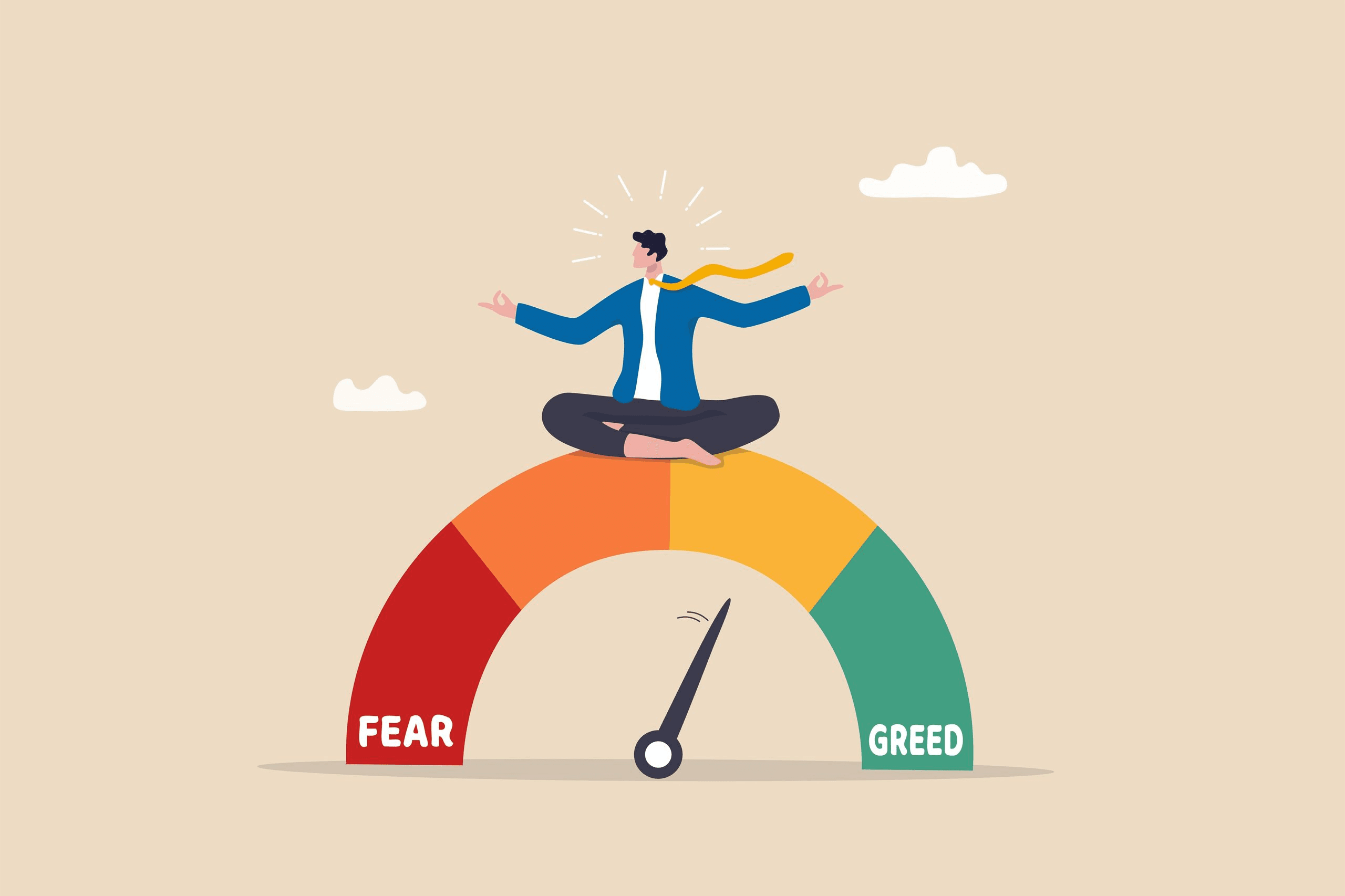
Loss aversion in investing describes the tendency to feel losses more strongly than equivalent gains.
A £100 loss may feel more upsetting than a £100 gain feels rewarding. That discomfort can make it difficult to reassess a struggling investment.
For example, you might hold an asset because selling would mean admitting a loss, even after the original investment case has weakened. Alternatively, fear of losing an existing gain might tempt you to sell sooner than your strategy requires.
How to manage loss aversion:
- Ask whether you would buy the investment today, given its current price and prospects.
- Review whether it still fits your goals and risk tolerance.
- Assess its role in your whole portfolio, rather than focusing only on the gain or loss.
A falling price alone is not a reason to sell, just as a wish to break even is not a reason to hold. The decision should reflect what you know now. For example, if gold falls below the price you paid, revisit why you bought it. If your aim was long-term portfolio diversification, consider whether gold still serves that purpose before deciding whether to sell or hold.
Narrative bias
When a compelling story outweighs investment evidence.

Narrative bias in investing is when a compelling story takes precedence over the evidence behind an investment.
People remember stories. A charismatic founder or a promise to transform an industry can make an investment feel convincing before you have examined the numbers.
Consider two descriptions of the same hypothetical company:
- The financial picture: sales are falling, the business is losing money and it needs more funding.
- The story: a pioneering company has appointed an ambitious new leader to bring its breakthrough technology to a global audience.
Both could be true. The second is more exciting, but it does not resolve the problems in the first.
How to reduce narrative bias:
- Separate what has happened from what someone predicts or promises.
- Check the evidence behind claims about growth and future demand.
- Consider whether the current price already reflects an optimistic outcome.
This applies to precious metals too. A persuasive argument that gold prices could rise is still a forecast, and should be examined alongside the risks.
Overconfidence bias
Overestimating your investment knowledge and judgement

Overconfidence bias in investing is when you place too much confidence in your knowledge, judgement or ability to predict investment outcomes.
A few successful purchases can make it tempting to believe you can consistently identify winners or anticipate market movements.
That confidence can encourage frequent trading or large positions in a narrow selection of investments. It can also make you underestimate uncertainty.
How to keep overconfidence in check:
- Record why you make each investment and review unsuccessful decisions as carefully as successful ones.
- Consider whether a gain reflected your analysis, favourable market conditions or luck.
- Set limits on how much you allocate to an individual investment.
Regular investing can also reduce the number of timing decisions you make. With pound-cost averaging, you invest a fixed amount at regular intervals, buying a larger quantity when prices are lower and a smaller quantity when they are higher.
For physical precious metals, GOLD AVENUE’s Auto-Invest lets you schedule recurring purchases of eligible gold and silver products. However, automation alone is not pound-cost averaging: the fixed-amount approach differs from buying a fixed quantity each time.
Regular purchases can support a planned approach, but do not guarantee a profit, prevent losses or ensure a better result than investing a lump sum. Our investment gold guide explores gold investing and buying strategies.
How to avoid emotional investing: 5 practical steps
A written plan, a suitable time horizon, and consistent decision rules can help reduce the influence of emotions on your investments.
1. Define your strategy before you invest
Write down your goals, how much you can afford to invest and the risks you are prepared to take. Record why you are buying and what would justify reviewing that decision.
2. Set an investment horizon
Consider when you may need the money. An investment intended for a distant goal needs a different approach from money you expect to spend soon. Your time horizon should help determine how much risk is appropriate.
3. Diversify your portfolio
Spreading investments across different assets reduces dependence on any single holding. It can help manage risk, although it cannot eliminate losses. Explore our portfolio diversification guide.
4. Pause before reacting
If a headline or price movement makes you want to act immediately, return to your original reasoning. Ask what has changed, whether the information is reliable and whether acting would support your goals.
5. Build a regular investing and review routine
Where appropriate, set an affordable contribution schedule. Review your portfolio at planned intervals and when your circumstances materially change. A routine can help you avoid constantly revisiting decisions in response to daily market noise.
You do not need to eliminate every emotion to become a more considered investor. The aim is to recognise when feelings or assumptions are taking over, then return to your evidence and plan.
If physical gold has a place in that plan, our beginner’s guide to gold explains the essentials before you explore gold bars and coins.

The Spotlight
The free newsletter helping you understand how to build your wealth.