
Why more investors are focusing on the long term amid market uncertainty
Discover why more investors are taking a long-term approach amid market uncertainty and how patience can help them navigate short-term volatility.
In an age of instant gratification and a 24-hour news cycle that plays havoc with emotions, a little patience and pause for thought can go a very long way. Especially when it comes to investing.
That’s why more and more investors are stepping back and taking the long view.
Amid economic and political uncertainty, there’s never been a more important time to slow down and think strategically.
So let’s dive into why and how to invest for the long term, and what it could mean for your future.
Investing during uncertainty
According to Schroders’ latest Global Investor Insights Survey, 85% of global investors anticipate increased market volatility in the 12 months ahead.
The key drivers?
- Persistent inflation concerns – rising costs of goods caused by geopolitical upheaval or more local triggers places pressure on consumers, industry and ultimately central banks, which all affect investments of every kind.
- Central bank rate decisions – a lack of clarity or predictability, or unexpected policy shifts can unsettle markets.
- Geopolitical uncertainty – conflict can affect the flow of everything from grain to oil, pushing prices up and destabilising markets.
- Record or near-record gold prices – despite gold’s long-term upward trend, those in search of a quick trade might be spooked by short-term price fluctuations.
Hounded by headlines
All of this upheaval is reported in real-time, with live updates streaming in from across the world 24/7. And gone are the days of the closing bell calling time on a market – crypto never sleeps.
With major market shifts seemingly arriving every week, not to mention the odd eye-watering IPO (hello SpaceX ), you’d be forgiven for feeling flustered.
But kneejerk reactions are never the answer. And neither is expecting a miracle trade in a matter of weeks.
We think Warren Buffett said it best.
"The stock market is a device for transferring money from the impatient to the patient.”
Warren Buffett
Look at the bigger picture
Just take a look at the S&P 500. Say you invested in July 2021. By January 2023, things might not look too rosy.
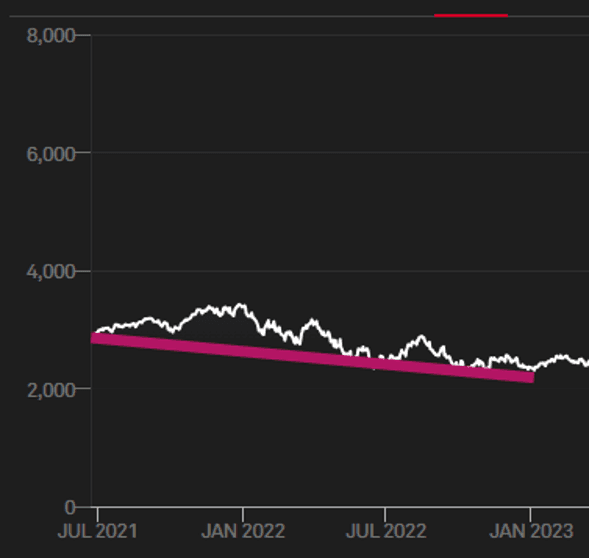
Zoom out to the bigger picture though, and the five-year view is much more positive.
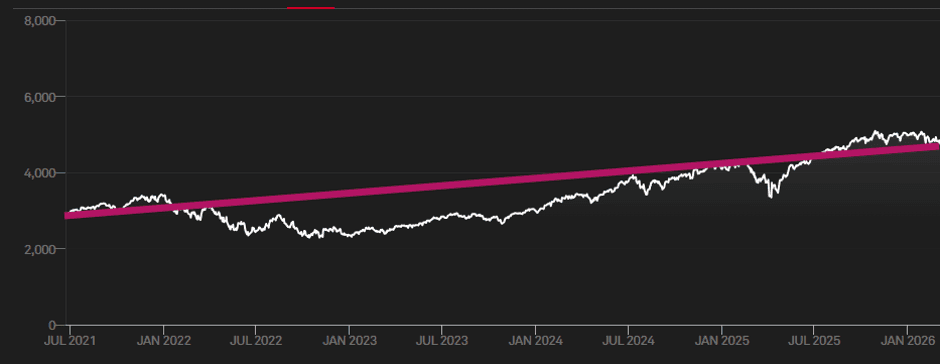
Now more than ever, it’s important to focus on a long-term strategy to reach your ultimate goal.
What history tells us about long-term investing
There have been many examples through history where patience has paid off. Let’s take chip maker Nvidia.
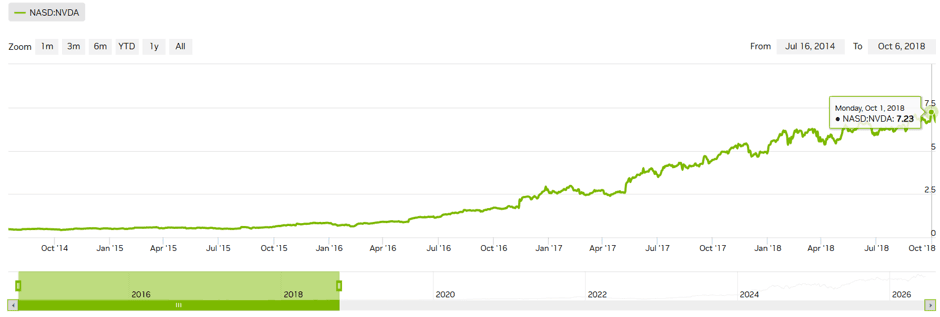
For years, their stock price bumbled along on a plateau. From July 2014 to July 2015, investors would barely have seen any growth.
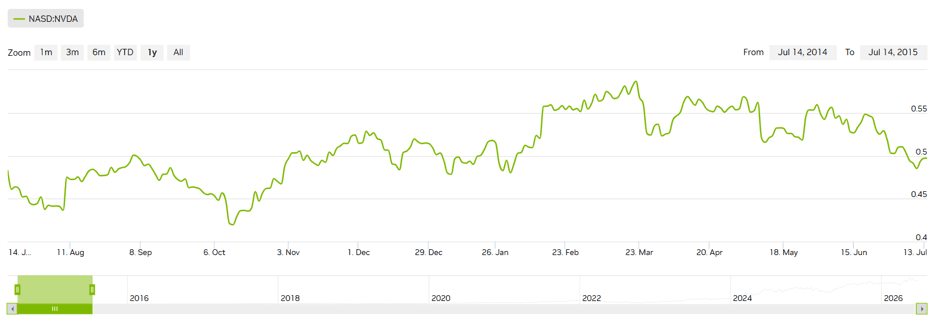
By 2018 though, prices were on the up, reaching $7.23 in October that year. What a win. Why not sell high and take the cash?
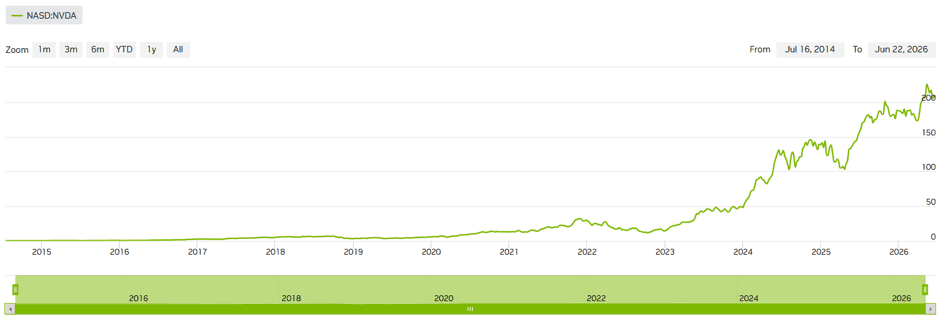
or those who held out to 2020 and beyond though, the rise has been stratospheric.
Yes, there’s an element of luck in investing in a company that later becomes central to the success of every big tech player! But patience certainly plays a role.
By 2026, those 2018 gains are looking tiny, with prices now over $200.
By focusing too heavily on short-term market movements, it would be easy to buy and sell at the wrong time. Not to mention the fees involved in multiple transactions.
By sitting it out – always with a weather eye on the company’s underlying financial health, management and competitive advantage – you might do better in the long term.
The benefits of maintaining a long-term perspective
If you haven’t already, now’s the time to identify an investment goal and timeframe.
Maybe you’re looking ahead to retirement. Maybe you’re hoping to fund a home improvement project in the next two years. Or a new business venture in ten.
Next, come up with a strategy.
When choosing your investments, aim for a mix to ensure you get a spread of risk, liquidity and return that suits your goal.
Long-term portfolio investments
- Stocks
- ETFs
- Gold and other precious metals
- Property
- Private equity
- Bonds
Finally, invest consistently to see the benefits of compounding. Think of it as growth on growth.
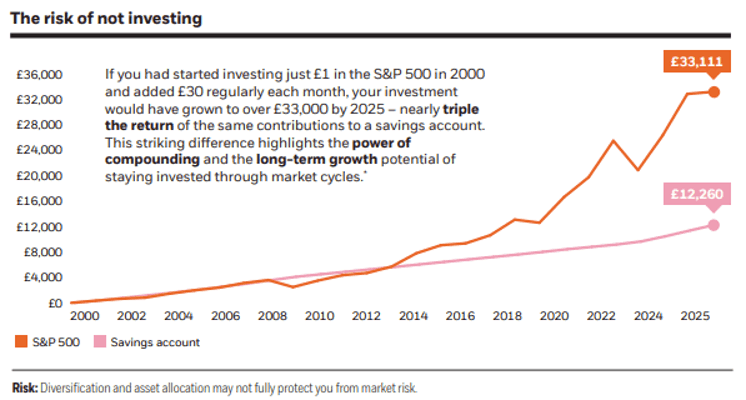
Whatever your ambition, a solid strategy and holding your nerve is everything. Yes, stay informed and follow the markets, but keep your eye on your own personal goal, rather than the latest drama on the tickers.
One simple way to maintain a consistent investment strategy is to use dollar-cost-averaging (DCA).
What is a DCA strategy and how does it work?
DCA is a method of investing that sees you put the same amount of money into a chosen asset (for instance gold) at regular intervals, regardless of the price. This means you can ride the waves of price fluctuations over time and potentially come out on top over the long term.
It may sound counterintuitive to some, but there’s a reason lots of investors use a DCA strategy.
How it works
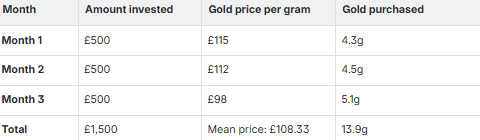
Let’s say you decide to invest £500 in gold every month. Over three months, the price of gold fluctuates. Instead of worrying about this though, you continue to invest your £500.
The result
Total invested: £1,500
Total gold acquired: 13.9g
Average cost per gram: £107.91 (1500/13.9)
By automatically buying more gold when the price was low (£98/g), and less when the price was high (£115/g), your average cost (107.91/g) is lower than the mean of the prices you bought at (£108.22/g).
The same would apply whether you invested £500 a week or £500 a year.
How diversification can help investors navigate uncertainty
Of course, the value of your investments can go down as well as up. But if your money is spread across a range of assets, when one goes down, another might go up, reducing the impact. In other words, don’t put all your eggs in one basket.
By reducing your exposure to one particular market, you’ll enjoy greater stability over the long term. Just make sure you regularly check in to make sure you’re striking the right balance.
For instance, it might make sense to put a bit more of your cash in riskier, more volatile investments when you’re young. Who knows, you might get lucky? And if you don’t, there’s time to recover.
As you approach retirement though, it might be wise to lean more towards ‘safe-haven’ assets like gold, to avoid a crash at the critical moment.
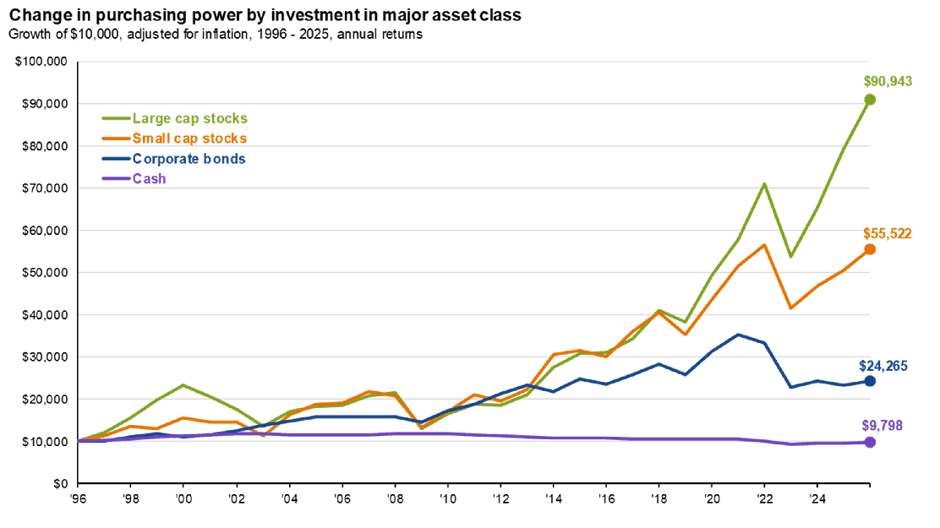
The bottom line: thanks to inflation, keeping your money as cash simply doesn’t pay. Unless your bank’s interest rate is outstripping inflation year on year, your money will lose its purchasing power.
The role of gold in a long-term investment strategy
Thanks to its scarcity and liquidity, gold is usually good at maintaining its value in uncertain markets. That’s why it can be used as a means of wealth preservation over the long term.
The main difference between gold and other investment assets is that its price isn’t linked to rapid speculation and leverage, but to macroeconomic conditions.
During times of rising inflation, falling interest rates, geopolitical uncertainty, currency fluctuations and financial market volatility, the price of gold has tended to go up.
And with live gold price charts, it’s easy to stay up to speed and pick your moment to invest. Just remember that past performance isn't indicative of future results.
Ready, set, strategy
While we may be living through unsettled, uncertain times, by thinking long-term, you can still build a sustainable investment strategy that sets you up for your future.
So take a step back, look at the bigger picture and maybe switch off those instant market notifications for a while
Shop our categories







The Spotlight
The free newsletter helping you understand how to build your wealth.