Is the FIFA World Cup Trophy Made of Pure Gold?
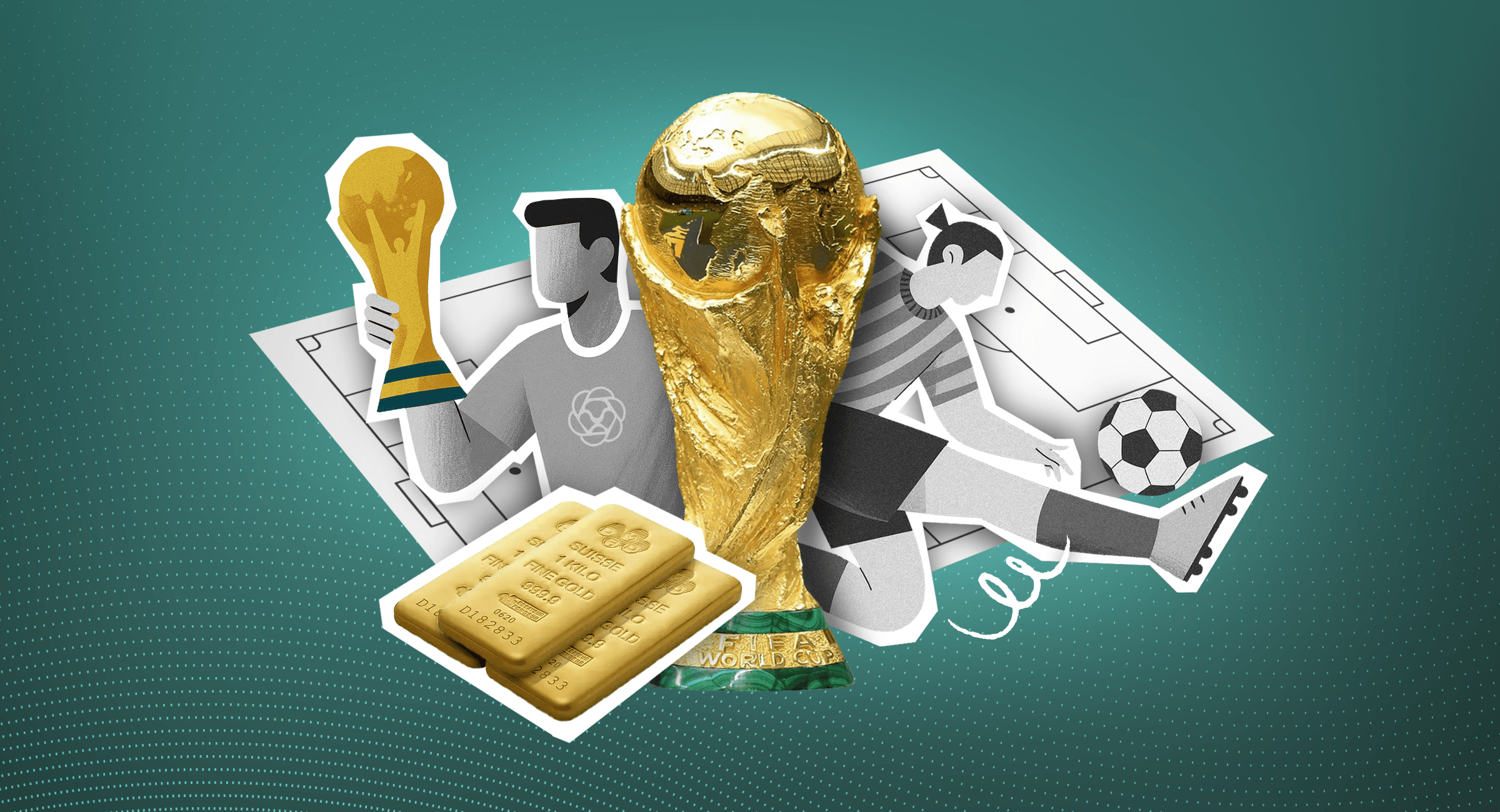
With the FIFA World Cup 2026™ fast approaching, we take a look at one of the most prestigious prizes in sport. Is the World Cup trophy solid gold? How heavy is it? And how did a dog called Pickles change the course of footballing history?
If you’re a football fan with an eye for gold, the World Cup is something of an ideal Venn diagram. Sporting prowess meets stunning Italian craftsmanship as teams battle it out to lift the coveted trophy.
That’s why we decided it was time to dive into the fascinating history and makeup of the cup itself.
And we couldn’t resist seeing if a few of the world’s top players are literally worth their weight in gold…
A short history of the FIFA World Cup trophy
Maybe, like us, you spent years getting the lyrics to Three Lions wrong. Or maybe you’ve always known the words weren’t in fact ‘…jewels remain still gleaming'.
That’s right, Baddiel and Skinner were on about the Jules Rimet cup all along.
Created for the first tournament in 1930 and simply named the World Cup, the trophy was renamed in 1946 to honour Jules Rimet, the FIFA president who (pardon the pun) got the ball rolling on the whole football world cup idea. Designed by sculptor Abel Lafleur and made of gold-plated silver, it depicted the ancient Greek goddess of victory, Nike.
What happened to the Jules Rimet trophy?
In 1970, in recognition of their third World Cup win, the Brazilian team was allowed to permanently keep the Jules Rimet trophy. Though it’s since gone walkabout, and its location remains unknown (and much-debated).
So, the cup we see proudly lifted these days is in fact a successor to that original trophy.
The modern World Cup trophy is born
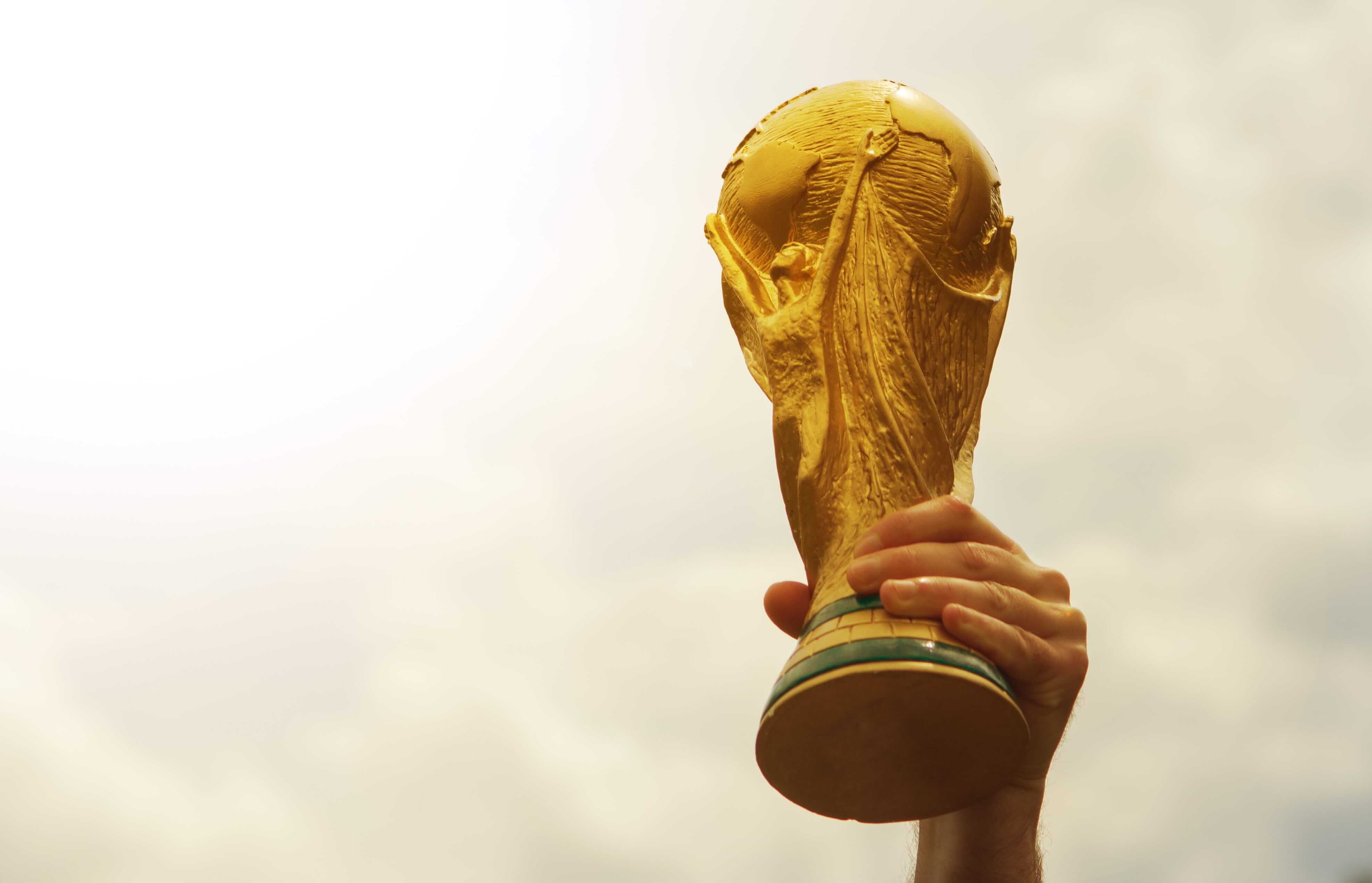
Produced for the 1974 World Cup, the current incarnation is the creation of Italian sculptor Silvio Gazzaniga. His design beat 52 other submissions from 6 other countries to become the iconic cup we all know and love today.
Here’s how the sculptor himself described it: "The lines spring out from the base, rising in spirals, stretching out to receive the world. From the remarkable dynamic tensions of the compact body of the sculpture rise the figures of two athletes at the stirring moment of victory."
A bit about Pickles
In 1966, a few months before the England team lifted the cup on home turf, the Jules Rimet trophy went on display in London. Only to be promptly stolen.
Following a week of bungled attempts to fake a ransom and have the trophy returned, it was found in a hedge by Pickles - a black and white collie dog.
Pickles quickly became a national hero, making TV appearances, earning medals and awards, and even a year of free food.
Unfortunately, the pup wasn’t on hand to help when the trophy was stolen again in 1983. Experts suspect it’s still in one piece, somewhere in Brazil.
“I think it’s quite a likely outcome that the Jules Rimet [trophy] is in somebody’s cupboard, and they don’t want to talk about it because they got it through criminality,” - Simon Kuper, journalist and football writer
Is the FIFA World Cup trophy solid gold?
In short, no. If it was, it would be far too heavy to lift off the floor, let alone hold aloft for that iconic celebratory snap.
In fact, the trophy is hollow and made of 18-carat gold.
Even so, it still contains a significant amount of the precious metal. But how much is the World Cup trophy worth? By our estimate, it’s around the €439,000, based on the gold content and gold price as of May 15, 2026.
So how big is the World Cup trophy? Weighing in at around 6.17kg, it’s 36.5cm tall. It's made from nearly 5kg of 18-carat gold and two layers of malachite.
Want to know more about gold? Check out our handy beginners' guide.
💡Read our SPOTLIGHT to learn the difference between 18-carat and 24-carat gold.
Where’s the World Cup trophy kept?
Unlike the Jules Rimet trophy, the current version is not handed over to a team. It permanently belongs to FIFA and is safely stored at the FIFA Museum in Zurich.
Instead, every winning team gets a gold-plated bronze replica of the cup referred to as the World Cup Winners’ Trophy.
And now, as promised, here's a little bonus for all our fellow gold and football fans.
How much gold would you need to buy a top-tier footballer in 2026?
Based on their eye-watering transfer fees, we did some quick pitch-side maths using our live gold prices on 28 April 2026…
- Lamine Yamal, Haaland and Mbappé (market value: €200 million): approx. 1.58 tonnes
- Vinicius Junior (€150 million): approx. 1.18 tonnes
- Michael Olise (€140 million): approx. 1.1 tonnes
- Jamal Musiala (€120 million): approx. 0.95 tonnes
Now let’s assume the average age of these football players is 30 years old. How much gold would we have needed to buy them in 1996 for the same price?
- Lamine Yamal, Haaland and Mbappé (market value: €200 million): approx. 18.2 tonnes
- Vinicius Junior (€150 million): approx. 13.6 tonnes
- Michael Olise (€140 million): approx. 12.7 tonnes
- Jamal Musiala (€120 million): approx. 10.9 tonnes
Celebrate the FIFA World Cup 2026 with a collectible
What better way to celebrate the World Cup heading to the US, Mexico and Canada, than with a little local collectible gold?